The Invisible Boundary Lines Dividing British Farmland
British farmland is being asked to accommodate a new regulatory reality. Precision breeding, including some forms of gene editing, is moving from laboratory research towards field testing and possible commercial cultivation, while organic growers must continue to meet certification rules that depend on maintaining production free from genetically modified material. The tension is not necessarily about whether a gene-edited crop is safe to eat. It is about who carries the economic risk when biological material moves across an invisible boundary between neighbouring farms.
Adventitious presence describes the unintended, incidental presence of material from one crop in another. It may arise through pollen movement, seed impurities, volunteers left after harvest, or mixing during transport and storage. For an organic farm, even a small and unintended presence can create a certification and marketing problem, particularly where buyers require strict non-GM assurance. The policy blind spot is clear: pollen and insects do not respect ownership boundaries, yet liability rules rarely provide an equally clear route to compensation. Without statutory notification, enforceable separation standards and a compensation mechanism, organic growers may be expected to defend their status at their own expense.
Precision Breeding and the Shifting Landscape of Open-Air Trials
The Genetic Technology (Precision Breeding) Act 2023 marked a significant change in England”s regulatory direction after Brexit. It created a framework for plants and animals produced through qualifying precision breeding techniques, where the resulting genetic changes could also have occurred through traditional breeding. The legislation is intended to separate those organisms from genetically modified organisms that contain genetic material introduced from another species. That distinction may be important in law, but it does not remove the practical question of coexistence in a landscape where different production systems operate side by side.
Regulatory responsibilities are devolved, creating additional complexity across England, Scotland, Wales and Northern Ireland. Products legally marketed in one part of Great Britain may move through the internal UK market, while Northern Ireland remains aligned with relevant EU rules for food and feed under the Windsor Framework. The result is a system in transition, with different cultivation and market rules potentially operating across the UK. Defra has also indicated that qualifying gene-edited products may not require specific labelling, which makes transparent information about field locations and production methods even more important for neighbouring growers and supply chains.
Open-air trials are not abstract exercises. Seed is drilled into soil, plants flower, pollen is released and machinery enters and leaves fields. The John Innes Centre field trial application illustrates the point. Researchers sought permission for trials involving genetically modified high-iron wheat and CRISPR-edited Brassica oleracea, a group that includes cabbage, broccoli, cauliflower, kale and Brussels sprouts. The proposed work used confined facilities at Norwich Research Park, with applications assessed under section 111 of the Environmental Protection Act 1990 and proposed-release information placed on a public register.
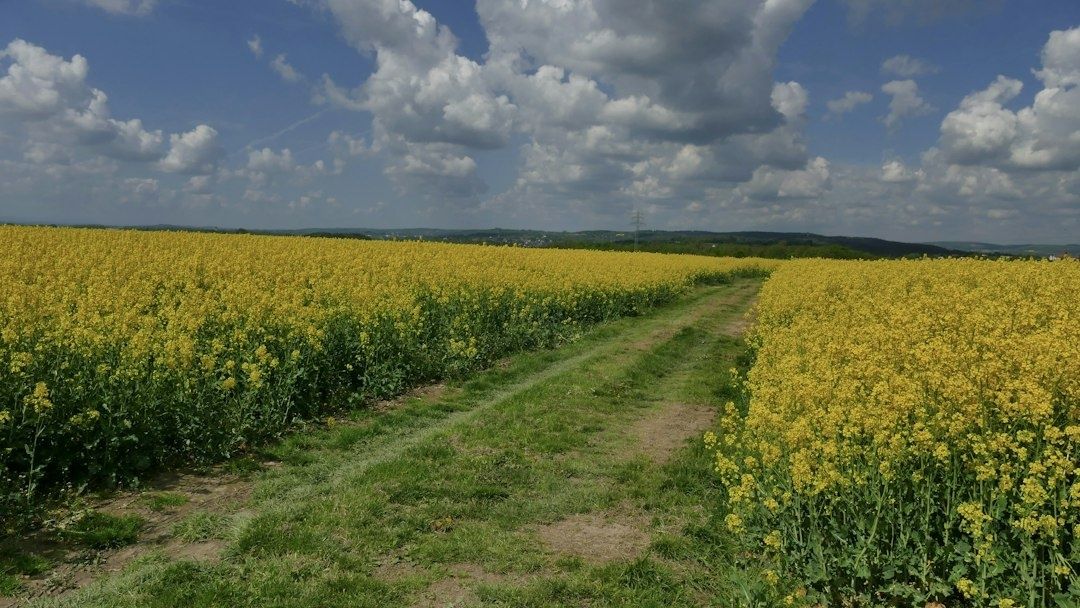
- Wind can carry pollen beyond the edge of a trial plot, with distance affected by crop height, weather and local topography.
- Bees and other insects can move between fields, carrying pollen across holdings that may follow different production standards.
- Harvest machinery, trailers, grain stores and transport routes can create additional opportunities for accidental mixing.
- Volunteer plants and seed spillage can complicate monitoring in later seasons, even where the original trial was carefully managed.
Containment therefore depends on more than a line on a map. It requires crop-specific distances, flowering-time management, monitoring, equipment hygiene, post-harvest controls and communication with neighbouring land managers. These measures may be technically feasible, but feasibility is not the same as fairness. A system that relies on the organic farm to discover, test and manage an external risk has effectively transferred containment costs away from the operator introducing the novel crop.
The True Cost of Defensive Farming on Organic Holdings
Organic growers already operate within a detailed assurance system. They maintain records, observe input restrictions, separate storage and handling, and submit to inspection. If a neighbouring trial or commercial crop creates a plausible risk of unwanted genetic material, the organic holding may add further controls, including laboratory testing of seed or harvested produce, expanded buffer areas and additional scrutiny of contractors. Each measure may appear modest in isolation. Together, they can alter the farm”s cropping plan and narrow its commercial options.
Unplanted buffer strips are a particularly direct cost. Land that could have produced a saleable crop becomes a precautionary zone. Wider hedgerows or altered field margins may help reduce movement in some circumstances, but they also require establishment, maintenance and land allocation. Testing brings laboratory fees, sampling labour and uncertainty about when to test and how many samples are sufficient. Organic certification bodies and buyers may also apply different contractual requirements, leaving growers unable to treat one negative test as a universal guarantee.
The greatest exposure is often the loss of market value. If an organic crop cannot meet a buyer”s assurance requirements, it may have to be sold into a conventional market, rejected, downgraded or destroyed. The farm may lose both the organic premium and the expected return on land, labour and inputs. This is not simply a theoretical risk for a specialist producer. Organic supply chains are built on trust, identity preservation and documented separation, so a single disputed incident can affect contracts, reputation and future access to buyers.
| Risk or control | Likely burden on the organic grower | Operational consequence |
|---|---|---|
| Baseline and repeat testing | Sampling, laboratory and record-keeping costs | More administration and delayed marketing decisions |
| Buffer strips | Foregone production from usable land | Lower yields and reduced cropping flexibility |
| Additional inspections | Staff time and certification fees | Greater compliance pressure without control of the source |
| Loss of organic status or buyer assurance | Potential loss of premium value | Downgrading, rejection or destruction of produce |
By contrast, the operator conducting the trial or growing the precision-bred crop may be able to plan around a defined field site and approved management conditions. That does not mean trial operators ignore containment. It does mean the legal and commercial consequences may be distributed unevenly. Practical coexistence guidance often stresses communication, spatial separation, good husbandry and careful handling. Those are sensible principles, but they only protect trust when responsibilities, evidence standards and financial consequences are allocated fairly.
Environmental Precedents and the Statutory Liability Gap
Environmental law already recognises that activities creating pollution risks may require controls, monitoring and remediation. The polluter-pays principle provides a useful benchmark: where an identifiable operator causes environmental harm, the cost should not automatically fall on an innocent third party or the public. Chemical contamination offers a particularly strong precedent. The government”s guidance on persistent organic pollutants explains that substances such as DDT, PCBs, PFOS, PFOA and related compounds are subject to strict restrictions because they persist, enter food chains and can cause serious harm. Specific concentration thresholds, storage duties and disposal rules apply even where traces arise in complex circumstances.
Biological movement is different from chemical pollution, and the comparison should not be overstated. Gene flow may be temporary, crop-specific and dependent on flowering biology. A gene-edited trait is not automatically a pollutant, and the safety assessment of a particular crop cannot be replaced by a generic assumption about risk. Yet the legal comparison exposes an important inconsistency. Where the state recognises that unwanted contamination can impose costs, it can establish thresholds, duties and routes to enforcement. For genetic coexistence in England, there is no clearly established statutory compensation fund or universally mandatory insurance arrangement designed specifically for genetic drift from precision-bred crops.
- Notification must come first. Neighbouring growers need timely information about what is being planted, where it will flower and which biological characteristics affect pollen or seed movement.
- Containment duties must be measurable. Crop-specific separation distances, flowering controls, equipment protocols and post-harvest monitoring should be defined before planting rather than negotiated after an incident.
- Liability must follow control. Where the introducing operator controls the source of the material, that operator should carry an appropriate share of investigation, remediation and compensation costs.
- Evidence rules must be realistic. A grower should not have to prove an impossible chain of custody across weather, insects, contractors and multiple neighbouring fields before receiving help.
At present, the evidentiary burden can fall largely on the traditional or organic farmer. Establishing source-of-origin may require baseline samples, pollen-flow analysis, field histories, laboratory tests and access to information held by another land manager. Even when contamination is detected, proving which field caused it may be difficult if several trials or crops exist nearby. That uncertainty can become a legal shield for the source and a financial trap for the affected farm.
A fair system should distinguish between a genuine food or environmental safety finding and an economic coexistence failure. The absence of a safety concern does not mean there is no economic harm. Organic buyers may still reject a consignment because it no longer satisfies a production standard or contract. Public policy must scrutinise both dimensions, rather than treating certification losses as a private inconvenience for the grower who chose a higher-assurance system.
Building Practical Protections for Shared Agricultural Landscapes
The first requirement is a reliable public registry. Before seed drilling begins, a field trial or qualifying precision-bred crop should be recorded with its location, crop species, trait category, expected flowering period, operator contact and containment plan. Notification should reach neighbouring farms, organic certifiers, local authorities and relevant supply-chain bodies in time for them to make practical decisions. A register published only after an application has been approved, or one that identifies a broad area without a usable location, is not enough for field-level risk management.
Protocols should also reflect crop biology. Brassicas, cereals and other crops do not present identical pollen and seed-movement patterns. A single national distance rule may be simple to administer but poorly suited to real landscapes. Measures should be proportionate to the crop, trait, field size, flowering overlap, prevailing winds, insect activity and proximity of sensitive production. This is where local land stewardship matters. Catchment-scale or regional coordination could make it easier to align drilling dates, separate flowering periods and manage shared machinery.
- Create a searchable national and devolved registry covering trials and commercial plantings.
- Require direct notification to potentially affected holdings before planting and before flowering.
- Publish crop-specific containment plans, including monitoring and post-harvest responsibilities.
- Establish an independent incident investigation process with access to relevant records and samples.
- Require financial security, insurance or participation in a compensation fund before approval.
Funding is the central fairness test. A shared risk fund could be financed by patent holders, technology developers, trial sponsors and commercial operators that benefit from the new system. Contributions could be calibrated according to crop area, risk profile and the number of affected holdings. Such a model would avoid forcing each organic farm to purchase private protection against a risk it did not create. It would also encourage developers to invest in robust containment, transparent records and better stewardship.
Individual growers should not have to wait for legislation before improving their position. Baseline testing can establish the condition of a field before a nearby trial flowers, although sampling plans should be discussed with the relevant certifier and buyer. Farms should retain dated field maps, seed invoices, crop records, photographs of field boundaries, contractor details and all communications about nearby activity. Contracts should clarify who pays for testing, what happens after a suspected incident and whether downgraded produce remains eligible for any compensation.
These steps cannot replace statutory protection. Documentation may help establish a claim, but it does not guarantee one. Nor should defensive farming become an unofficial requirement imposed through market pressure. The objective must be prevention first, transparent investigation second and prompt compensation where loss is established.
Securing Legal Parity for the Future of UK Agriculture
Coexistence cannot be built on informal neighbourly goodwill alone. Farmers may communicate constructively, but they operate under different commercial pressures and often lack the authority to control activities on adjacent land. Organic growers have made a market choice that depends on documented integrity, while precision-breeding operators may be pursuing public or commercial benefits under a newly liberalised framework. Both choices can exist in the same landscape, but only if the rules recognise that biological movement creates unequal exposure.
Policymakers should establish mandatory notification registries, crop-specific separation and monitoring standards, clear evidentiary rules, and a statutory compensation mechanism backed by compulsory financial contributions or insurance. Organic advocates should press certifiers, buyers and ministers for consistent thresholds and accessible incident procedures. Conventional growers should seek early information, maintain transparent communication with neighbours and avoid assuming that the absence of a food-safety finding eliminates economic responsibility. Regional land stewards can help coordinate field-level planning, but coordination must support enforceable rights rather than substitute for them.
The public interest requires more than promises that precision breeding will deliver resilient crops, better nutrition or reduced environmental pressure. Those claims should be tested against evidence and long-term impacts, while the immediate economic consequences of coexistence are made visible. A credible UK framework will not prohibit innovation by default. It will ensure that innovation does not quietly privatise benefits while socialising the costs of genetic drift. Legal parity begins when the farmer least able to control the risk is no longer expected to pay for it alone.